
Project Film
Case Study
18-19 The Strand, Dee Why
Client
Lido
Location
Dee Why, NSW
Overview
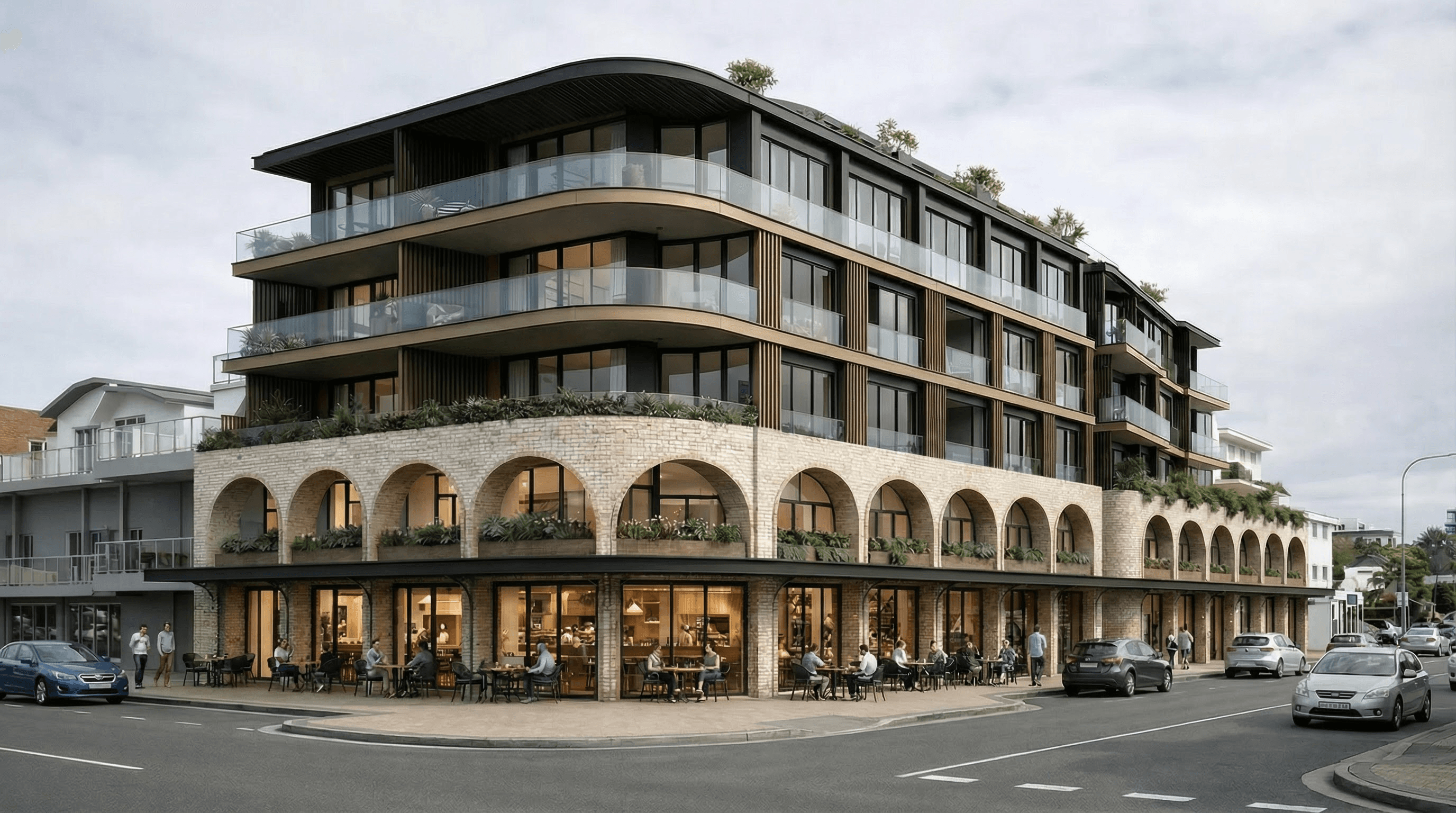
CoastalGen was engaged to translate architectural drawings for a new mixed-use development at 18-19 The Strand into high-quality visual assets.
The goal was simple: take a technical design and make it feel real, grounded, and immediately understandable within its coastal context.
The Challenge
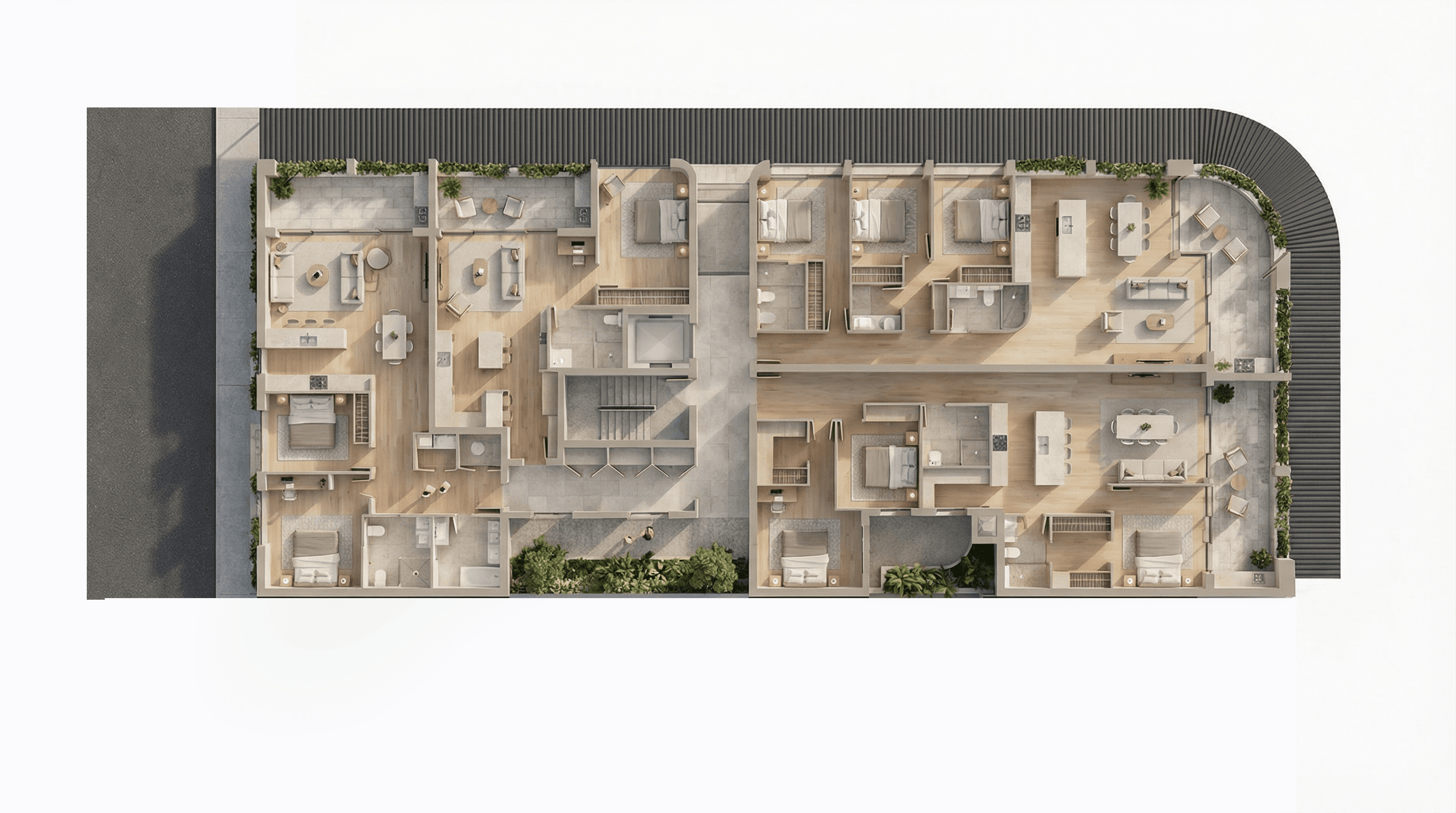
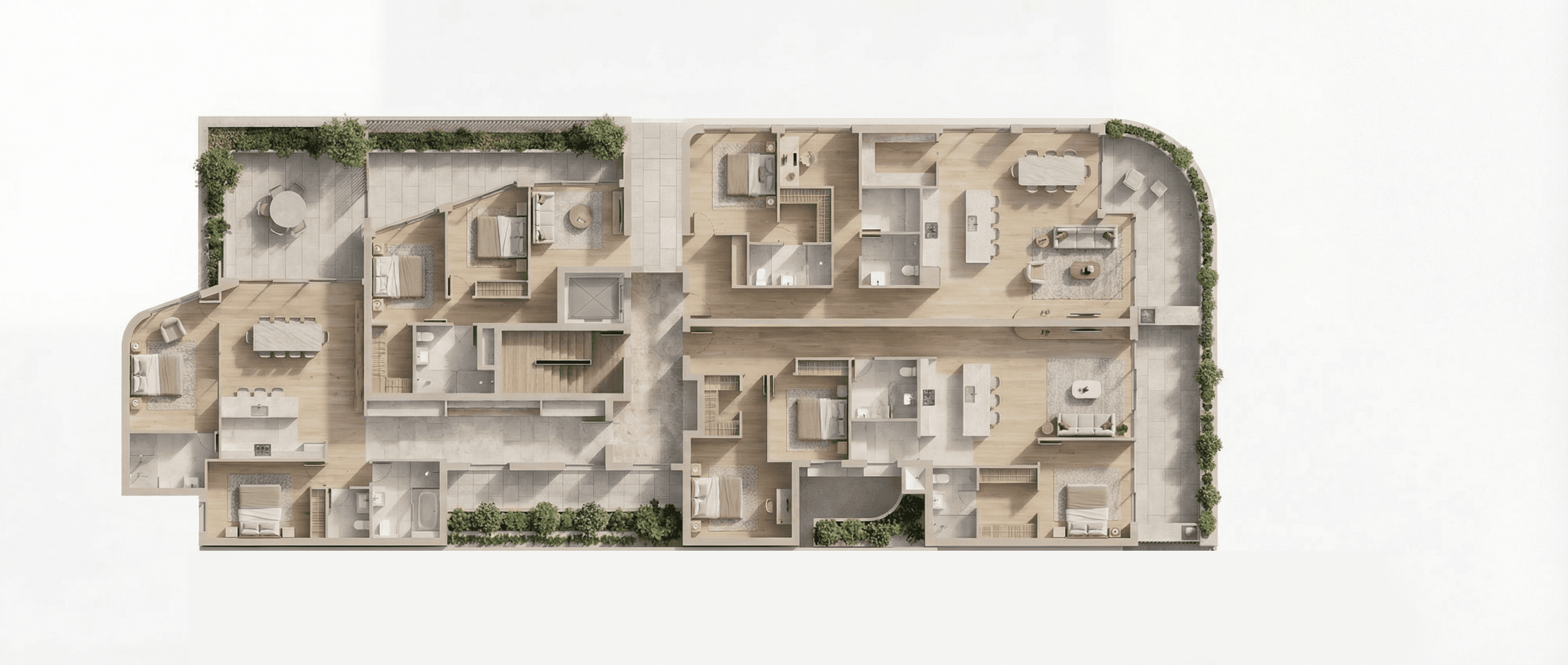
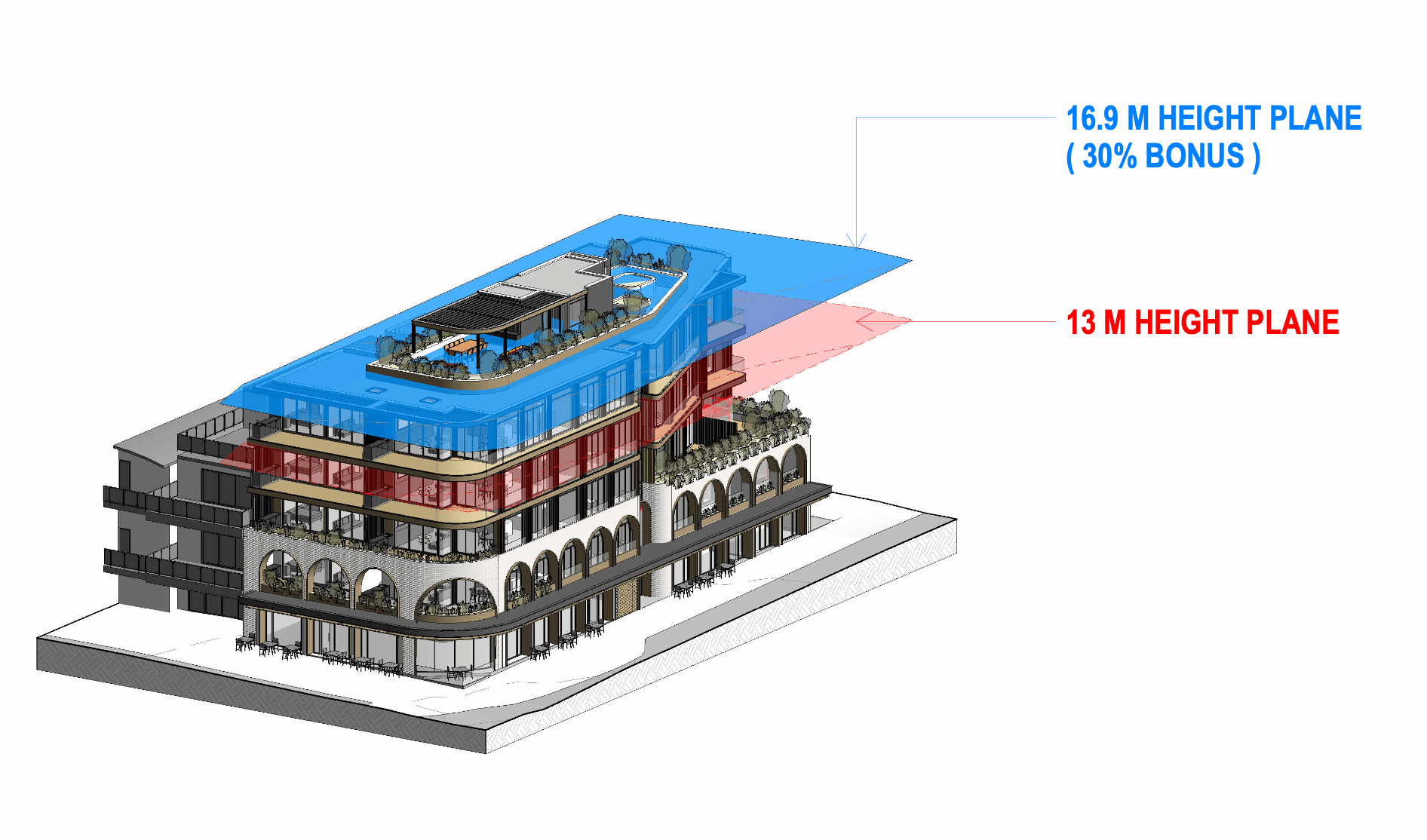
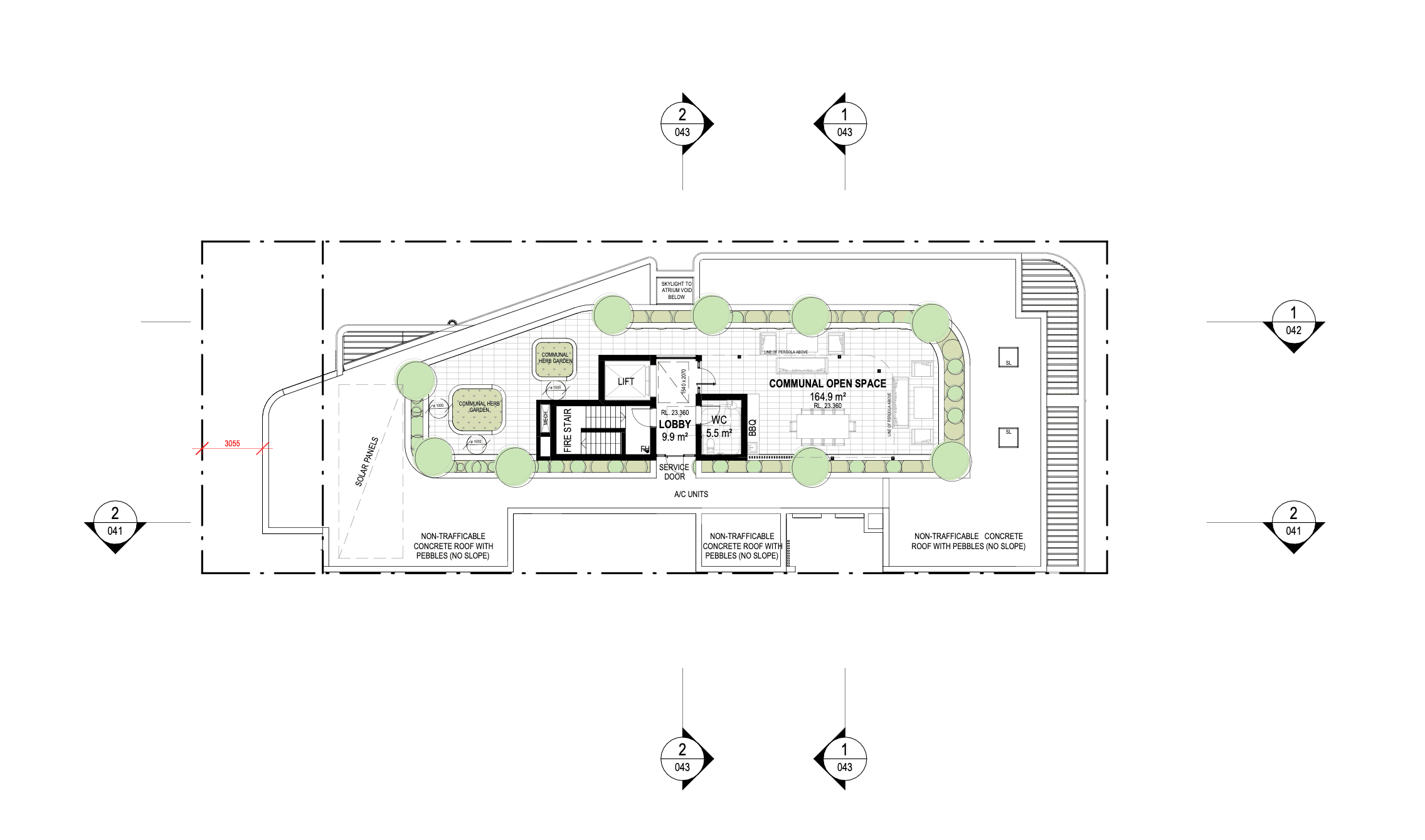
The project began with CAD drawings and rooftop plans that lacked real-world clarity.
- No environmental context
- Limited material definition
- Difficulty communicating scale and street presence
- A highly recognisable Dee Why corner that required accuracy
The development needed to be visualised not just as a building, but as part of a lived-in streetscape.
Our Approach
1
Geometry Accuracy
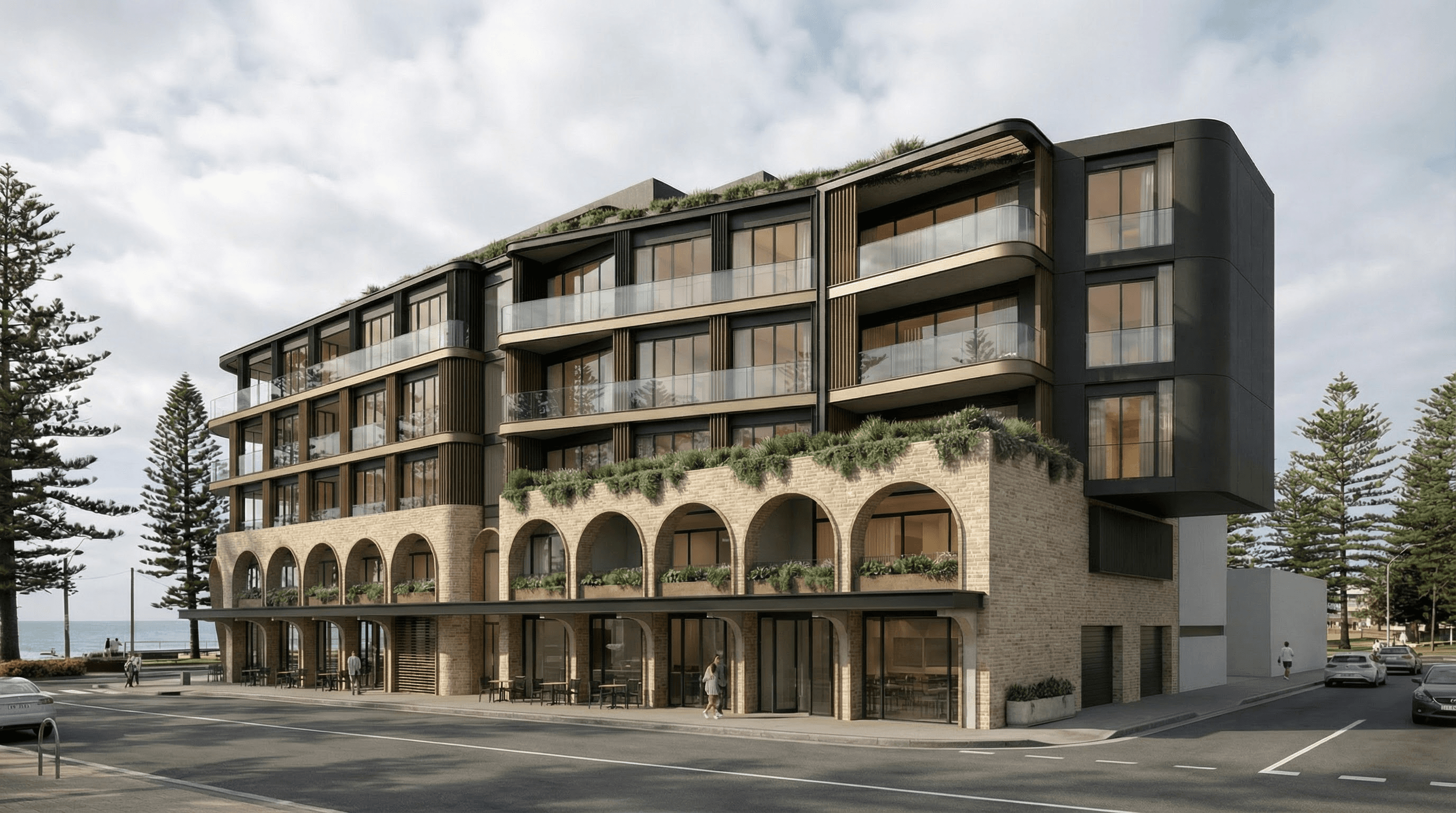
We locked all outputs to the architectural drawings and treated fidelity as the starting point, not the finish.
- Exact massing and proportions
- Correct balcony curvature and slab depths
- Consistent podium arch rhythm
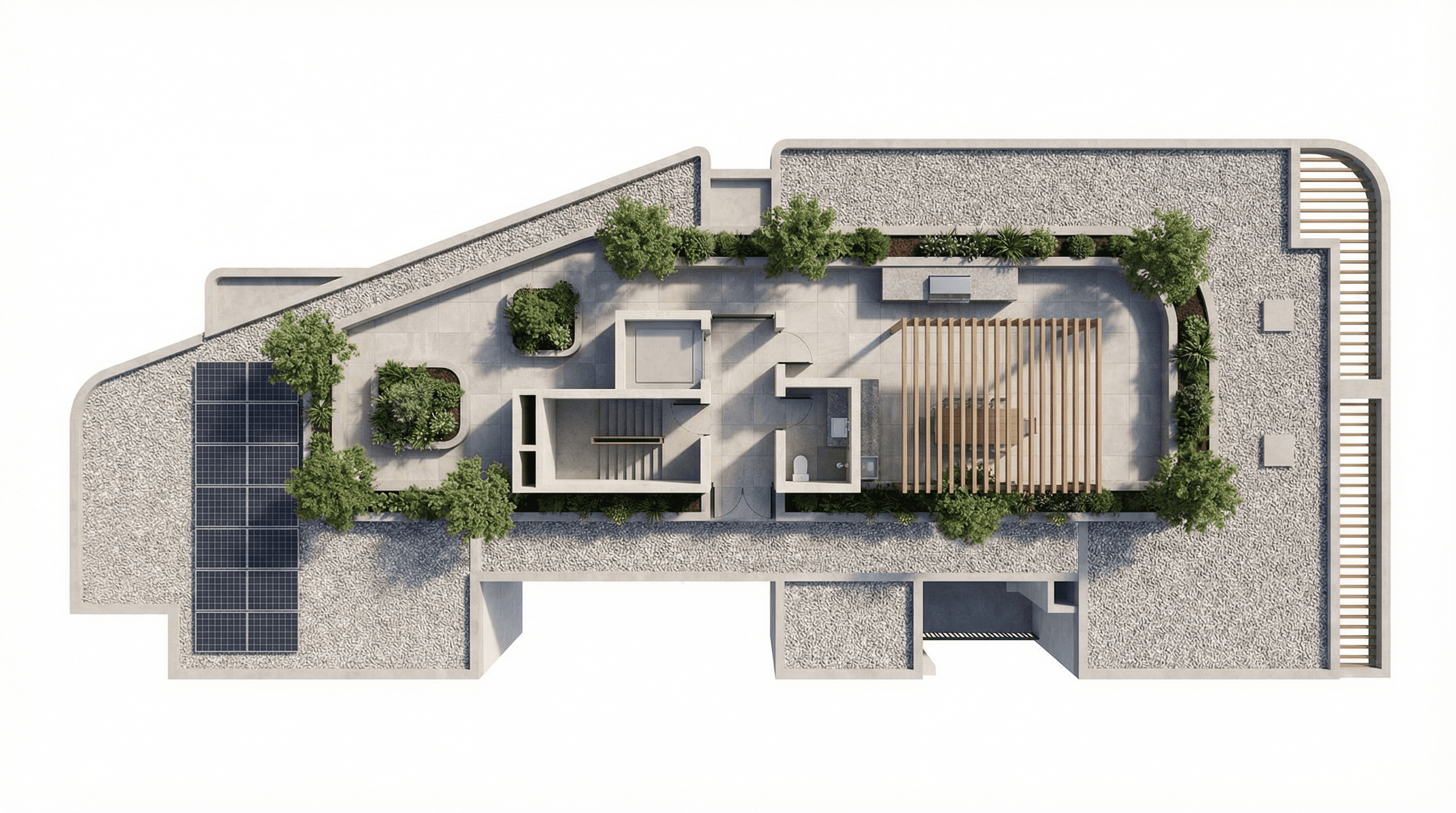
- Faithful rooftop layout including pergola, planting, and services
2
Material Elevation
We introduced a refined coastal material palette to shift the project from conceptual to premium.
- Light-toned brick podium with visible mortar detail
- Warm champagne slab banding
- Vertical timber battens for depth and rhythm
- Frameless glass balustrades
- Integrated planting throughout balconies and roof
3
Real-World Site Integration
A key part of the process was embedding the building into its actual Dee Why location so the visuals felt placed, not generic.
- Positioned accurately on The Strand and Howard Ave corner
- Matched curb geometry and pedestrian crossings
- Reflected surrounding Dee Why building scale and density
- Maintained correct coastal orientation
4
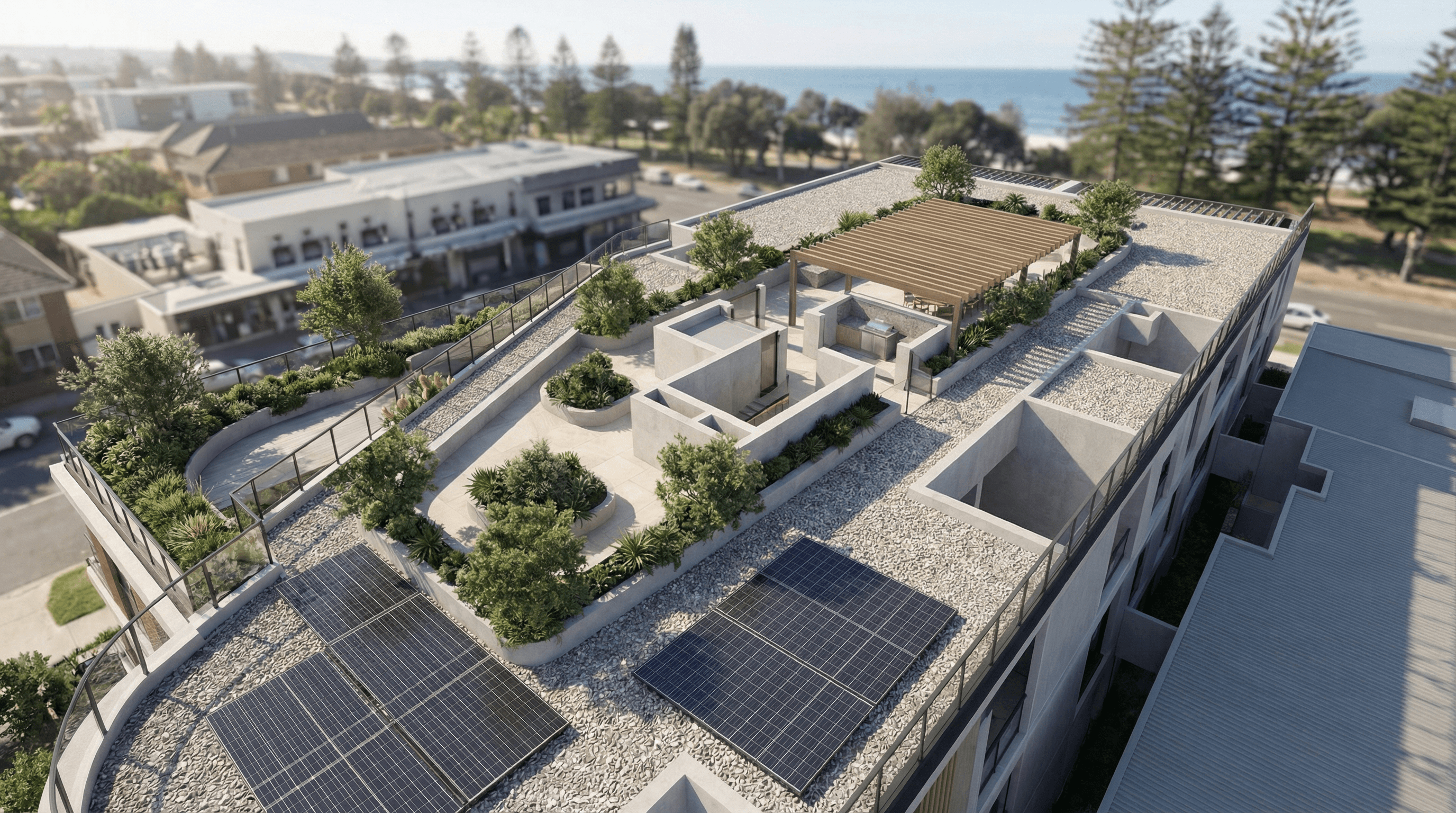
Rooftop Experience
The rooftop was developed as a lifestyle feature with clear social, planted, and service zones.
- Communal seating and dining areas
- Pergola-covered social zone
- Structured planting and circulation
- Clearly defined service zones including AC and solar
- Solar panels positioned to the rear of the building
5
Human Activation
To communicate how the development would function day to day, we introduced subtle cues of occupation and use.
- Ground floor activated with cafes and restaurants
- Outdoor seating integrated into the streetscape
- Subtle pedestrian movement introduced
- Balcony and rooftop usage implied through light interaction
Project Visuals
Reference Images


The Outcome
- Clearly communicate the design intent
- Show the building within its real Dee Why context
- Elevate perceived value through material realism
- Help stakeholders understand how the space will be used
- Provide strong assets for marketing, planning, and presentation
Why It Worked
- Maintaining strict architectural accuracy
- Enhancing designs without altering intent
- Grounding concepts in real-world environments
- Using GenAI as a controlled, precision tool